Buried in the Bloom: The Chilling Seduction of Belonging in Midsommar
- alilynnbry
- 1 day ago
- 4 min read
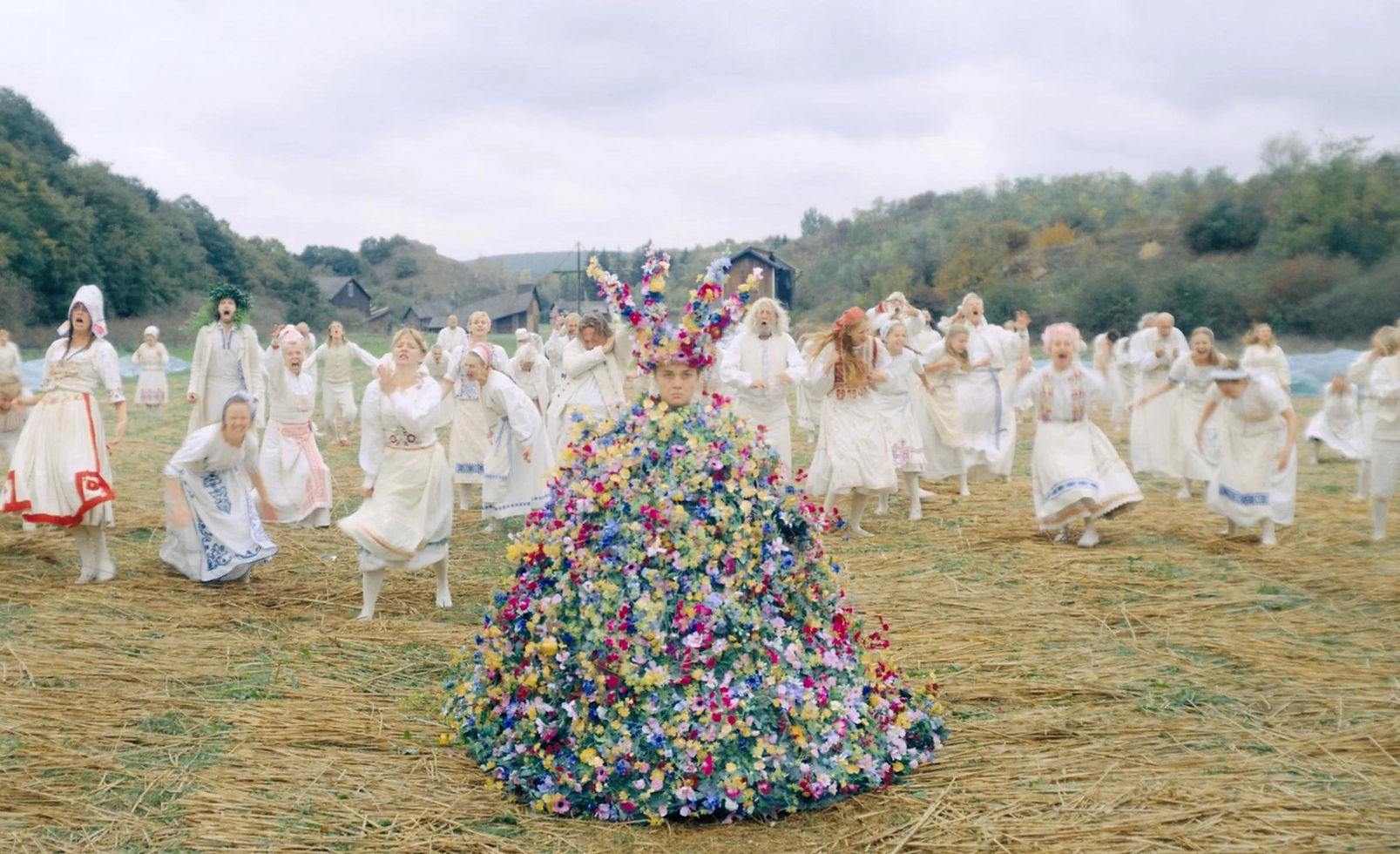
Ari Aster’s Midsommar is a horror film that refuses to hide in the dark. Its nightmares unfold beneath endless blue skies, surrounded by flowers, white dresses, sunlit meadows, and the deceptively gentle rhythms of rural life. This inversion of traditional horror is central to the film’s power: the daylight does not offer safety, but exposure. There is nowhere for the characters or the audience to conceal themselves.
At its core, Midsommar is a film about grief and emotional abandonment. Dani, played by Florence Pugh, begins the story already trapped inside an unbearable private catastrophe. Her relationship with Christian is emotionally vacant, yet she clings to it because it represents continuity in a life that has been violently destabilized. Christian’s indifference is not presented through melodramatic cruelty, but through small gestures of neglect: delayed responses, distracted conversations, and the persistent sense that Dani’s pain is an inconvenience.
The film’s horror emerges from this emotional isolation before it emerges from the rituals of the Hårga. The community’s disturbing practices are horrifying, but they are also communal. The villagers cry together, celebrate together, and even physically mirror one another’s emotions. Dani, by contrast, is initially surrounded by people yet profoundly alone. The Hårga’s willingness to share suffering becomes both grotesque and seductive. Their rituals offer her something Christian never does: recognition.
Aster’s camera work reinforces this psychological transformation. The film frequently uses symmetrical compositions, wide-angle lenses, and slow, deliberate movements to create a world that feels visually harmonious but morally warped. The Hårga’s village is arranged almost like an idyllic painting, yet the precision of its design makes it uncanny. The characters appear less like individuals moving through a natural environment and more like pieces placed within a ritualistic tableau.
The camera also destabilizes perception. As the characters consume psychedelic substances, the image itself seems to breathe and bend. Trees ripple, landscapes distort, and the edges of the frame lose their reliability. These effects are not merely visual decoration; they place us inside Dani’s altered consciousness. Reality becomes emotionally rather than physically unstable. The world is changing because her relationship to it is changing.
The film’s color grading is equally significant. Midsommar is drenched in whites, greens, yellows, and floral pastels. At first, these colors suggest innocence and renewal, but their brightness gradually becomes oppressive. The absence of shadow creates a visual form of psychological claustrophobia. Darkness would allow privacy, ambiguity, and escape; the Hårga’s perpetual sunlight allows none of these things. Everything is visible, and visibility becomes a kind of violence.
Flowers function as both aesthetic motif and emotional language. They decorate the village, crown Dani, and eventually appear to move in sympathy with her body. Nature in Midsommar is not passive scenery. It seems to participate in the characters’ emotions, blurring the boundary between human feeling and ritual environment. This is especially important in the final act, when Dani’s transformation is expressed through the flowers surrounding her. She is no longer merely observing the Hårga’s world; she has been absorbed into it.
The film’s pacing also deserves attention. Aster allows discomfort to accumulate gradually. Long pauses, extended rituals, and moments of apparent normality create a sense that something terrible is always approaching. The film’s most shocking scenes are made more effective because they are not edited as conventional jump scares. They are presented with an almost clinical patience, forcing the viewer to remain present with what is happening.
Yet Midsommar is not simply a story of a vulnerable woman being manipulated by a cult. Its ending is more morally ambiguous and more emotionally complicated than that interpretation allows. Dani’s final smile, after Christian is placed inside the bear’s carcass and burned alongside the other sacrifices, is undeniably horrifying. But it is also, in a twisted sense, liberating. Christian represents the emotional structure that has kept Dani suspended: a relationship in which she is unseen, unsupported, and constantly apologizing for her needs. His death does not erase her trauma, but it marks the destruction of the life she could no longer inhabit.
That smile is therefore difficult to categorize. Is it happiness? Relief? Surrender? The film refuses to provide a clean answer. Dani has found belonging, but only within a community whose compassion is inseparable from cruelty. The Hårga offer her genuine emotional recognition, yet that recognition is built upon violence and indoctrination. The ending’s power lies in this contradiction: Dani is both victim and initiate, liberated and consumed.
What makes Midsommar so distinctive is its understanding that horror does not always come from being alone. Sometimes it comes from finding a community willing to accept every part of you, provided you surrender yourself completely. Aster turns grief into ritual, intimacy into possession, and sunlight into a weapon. The result is a film that feels less like a conventional nightmare than a beautiful, feverish dream from which Dani may never want to wake.
For all its brutality, Midsommar is ultimately about the terrifying comfort of being understood. Its final image offers no redemption, but it does offer release. Dani’s smile may be morally disturbing, yet emotionally it feels earned: the first unguarded expression of someone who has finally stopped begging to be loved by people incapable of loving her.