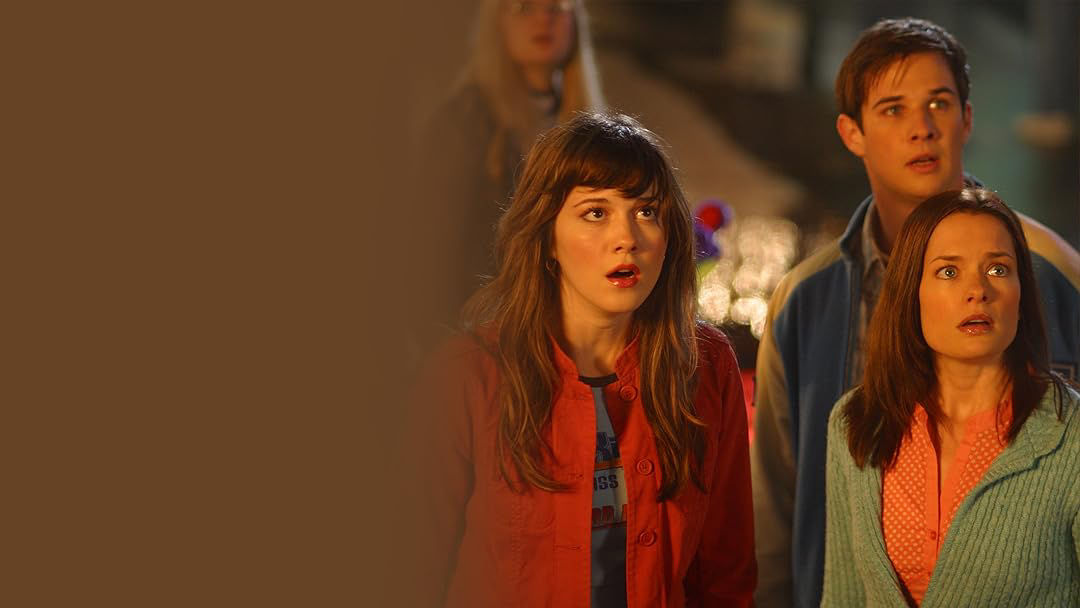
Fatal Velocity: Framing the Dread of Final Destination 3
When looking back at the Final Destination franchise, it becomes clear that these films are less about the "who" and entirely about the "how." They tap into a very specific, universal paranoia: the inherent distrust of the physical world around us. For my latest dive into early-2000s horror, I strapped in for Final Destination 3 (2006).
While it might not deliver the same heavy, existential gut-punch as its predecessors, it remains a fascinating case study in building tension through kinetic cinematography and creative environmental hazards. It proves, once again, that this franchise has an unmatched, almost comical genius for finding terrifying new places for us to meet our maker.
Let’s start with the undisputed highlight of the film: the opening sequence. Moving away from the exploding aircraft of the first film and the visceral highway pile-up of the second, Final Destination 3 traps us on "The Devil’s Flight" roller coaster.
From a filmmaking perspective, this sequence is a brilliant exercise in sensory overload and mechanical dread. Director James Wong utilizes the camera to establish a voyeuristic relationship between the audience and the machinery.
Extreme Close-Ups (ECUs): Before the ride even starts, the camera lingers uncomfortably close on fraying hydraulic tubes, leaking grease, and rattling safety harnesses. These shots condition the audience to view the environment itself as the antagonist.
Audio-Visual Dissonance: The screeching metal and grinding gears are amplified over the excited screams of the teenagers, creating a stark contrast between youthful invincibility and cold, unfeeling physics.
Shaky Cam and Dutch Angles: Once the disaster initiates, the cinematography becomes chaotic. The use of canted (Dutch) angles throws off our visual equilibrium, perfectly mirroring the physical disorientation of a derailing coaster.
One of the most intellectually engaging aspects of Final Destination 3 is its central narrative device: Wendy’s digital camera. The film cleverly uses photography not just as a plot device to foreshadow the kills, but as a meta-commentary on the act of looking.
In horror, the camera usually dictates what we are allowed to see. Here, the characters' cameras dictate what they are destined to experience.
Wong plays with depth of field and focus to brilliant effect here. Throughout the film, we see moments of rack focusing; where the camera shifts focus from a character in the foreground to an innocuous object in the background (a ceiling fan, a puddle of water, a stack of heavy boxes). This visual technique forces the audience into an active state of paranoia. We are no longer just watching the characters; we are scanning the frame with them, looking for the deadly anomalies hiding in plain sight.
Despite the incredibly clever camera work and the morbid creativity of the set pieces, seriously, the tanning bed sequence remains an iconic piece of claustrophobic horror; I have to admit that Final Destination 3 doesn't hit quite as hard as the first two entries.
By the third installment, the existential terror of "Death as an unseen force" has crystallized into a rigid formula. In the first film, the concept was terrifyingly fresh. By part three, we are acutely aware of the rules. The film occasionally trades the genuine psychological dread of its predecessors for popcorn-slasher spectacle.
However, if you view it through the lens of pure cinematic spectacle, it’s a fiercely entertaining ride. It takes the mundane; a drive-thru, a gym, a home improvement store and weaponizes it through sharp editing and deliberate, anxiety-inducing cinematography.
Final Destination 3 might be the moment the franchise fully embraced its own dark comedy, leaning into the "lol, how are they going to die here?" aspect of the premise. But as an exercise in visual tension and creative framing, it proves there is still plenty of terrifying art hidden within its mechanical madness.