The Industrial Gothic: Why Resident Evil (2002) Still Bites
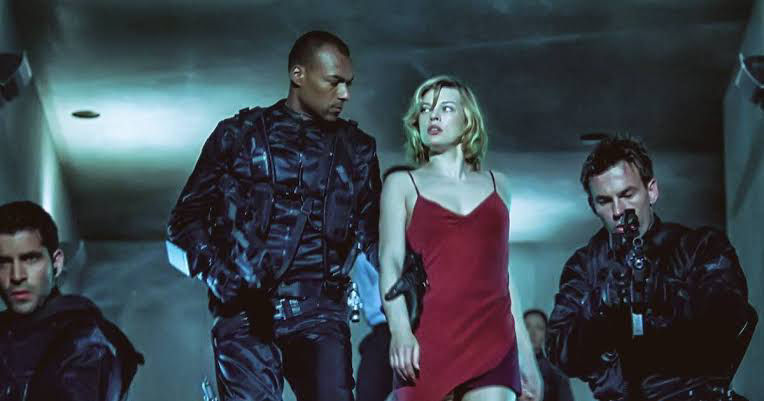
The year was 2002. The world was vibrating with a specific kind of post-millennial tension; a mix of digital wonder and corporate paranoia. While purists of the PlayStation source material were busy looking for a literal "haunted house," director Paul W.S. Anderson was busy building a subterranean cathedral of glass, steel, and viral infection.
Revisiting the original Resident Evil film today reveals a work that is far more intellectually cohesive and aesthetically daring than its "video game movie" label suggests. It is a sleek, mean, and kinetically charged descent into a modern underworld.
One cannot discuss the visceral impact of this film without addressing its auditory DNA. The score; a collaborative nightmare between Marco Beltrami and Marilyn Manson, is arguably the film's most vital organ.
Manson brought a jagged, industrial pulse to The Hive. It isn't just a soundtrack; it’s the sound of a machine digesting human beings. The score trades traditional orchestral swells for metallic screeches and rhythmic, abrasive synths. When the "Laser Room" sequence begins, the music doesn't just underscore the tension; it is the tension. It transforms the film into a techno-gothic rave where the stakes are life and limb.
The film’s brilliance lies in its setting. By moving the action to The Hive, a top-secret underground research facility, the story evolves from a simple monster flick into a critique of corporate hubris.
• The Sterile Terror: Unlike the rotting wood of the games, the film utilizes clinical blues and cold whites. The horror isn't just what’s in the dark; it’s the bright, sterile efficiency of a corporation that views human life as a variable in an equation.
• The Red Queen: The decision to make the primary antagonist a holographic child/AI was a masterstroke. She represents "logic" stripped of empathy; the ultimate personification of the Umbrella Corporation's ethos.
• The Viral MacGuffin: The T-Virus is presented as a terrifying biological clock. The film captures that "roller coaster" energy perfectly, utilizing a ticking-clock narrative that keeps the audience in a state of constant, forward-leaning anxiety.
Resident Evil (2002) is a time capsule of an era where horror was shedding its 90s slasher skin and putting on a tactical vest. It’s a film that values momentum and mood over exposition. With its amnesiac protagonist, Alice, serving as our surrogate, we are dropped into a world that feels both alien and eerily plausible.
For the modern horror enthusiast, it remains a high-water mark for the action-horror subgenre; a film that proves that even in the cold, calculated world of biotechnology, the things that go bump in the night are still very, very real. "All remains of the biological project must be destroyed." In a world of bloated franchises, the lean, industrial bite of the original Resident Evil remains a refreshing, high-octane shot to the system.